
Soundproof Underlay for Flats: What Actually Stops Noise Complaints
Most people don't come to me asking about acoustic underlay because they're curious about decibels. They come to me because they've had a letter from the management company, or a difficult conversation with the people downstairs, or a lease document that says "carpet must be fitted in all living areas" and they've no idea what that actually means for the flooring they're about to buy. If that's you, you're not alone, and you're not being unreasonable. Impact noise between flats is one of the most common sources of neighbour disputes in the UK, and it's usually the floor, not the walls, that's the problem.
This post is the plain-English version of that conversation. No jargon, no scare tactics about "soundproofing" your entire flat, just an honest answer on what underlay can and can't do, what your lease is probably asking for, and what the actual numbers mean when someone throws a dB figure at you.
- Many flat leases require carpet in living areas specifically to control footfall noise between floors, and management companies often demand acoustic underlay before approving any hard flooring.
- Underlay addresses impact noise (footsteps, dropped objects, dragged furniture). It does very little for airborne noise (voices, TV, music through a wall).
- Building Regs Approved Document E sets a construction benchmark of 45dB airborne / 62dB impact for new-build separating floors, and 43dB / 64dB for conversions.
- A premium 10-12mm PU foam underlay can achieve up to around 49dB of impact-noise reduction, comparable to some dedicated acoustic products, and enough to satisfy most standard lease requirements under a proper carpet.
- If a lease or management company demands a specific certified acoustic rating, denser rubber or felt-rubber hybrid underlay may be the better fit, and we can fit carpet over a specialist underlay you source yourself as a labour-only job.
The Carpet Rule in Flat Leases (Why Hard Flooring Causes Fights)
If you've read your lease and found a clause saying living rooms and bedrooms must be carpeted, you're not imagining it and you're not the only one. It's a genuinely common condition in flats, particularly in Victorian and Edwardian conversions where the original floors were never built with sound insulation in mind, and in some purpose-built blocks too. The reasoning is simple: a freeholder or management company that's had noise complaints before knows that a hard floor above a flat transmits far more footfall noise downstairs than a carpeted one, and a blanket carpet clause is the easiest way to avoid a repeat.
In practice, most leases I come across don't ban hard flooring outright. They allow it, but only with written approval from the management company, and that approval almost always hinges on proof of a suitable acoustic underlay. I've fitted plenty of jobs where the customer had to submit a spec sheet or a product datasheet before the managing agent would sign off on the works. If you're planning LVT or vinyl in a flat, check this before you buy a single plank. It's a far cheaper problem to solve on paper than after the floor's already down.
None of this means every flat needs to feel like a padded cell. It means the person or company managing the building has a legitimate interest in keeping impact noise down for the flat below, and carpet with the right underlay is the simplest, cheapest way most leases achieve that.
Understanding Noise: Airborne vs Impact (The Simple Version)
There are two completely different kinds of noise at play here, and conflating them is where most of the confusion, and most of the wasted money, comes from.
Impact noise is a direct physical knock transmitted through the floor structure: footsteps, a dropped phone, a dining chair scraping across the floor, a dog's claws on a hard surface. This is exactly what carpet and underlay are designed to deal with. A soft, cushioned layer between the floor covering and the subfloor absorbs the shock of the impact before it can travel down through the joists or slab into the flat below.
Airborne noise is sound travelling through the air and then through the building structure: a raised voice, a television, music, a phone ringing. This is a different problem entirely, and it's honestly not one that floor underlay does much for. Airborne noise mostly travels through walls, ceilings and any gaps or weak points in the structure, and it's addressed with mass, insulation and sealing, not with what's underfoot. If your actual complaint is that you can hear your neighbour's television through the ceiling, new underlay is unlikely to be the fix, and I'd rather tell you that now than sell you a floor that doesn't solve the problem you actually have.
Where underlay genuinely earns its keep is impact noise, and that's almost always what a lease clause or a downstairs-neighbour complaint is actually about.
Send Paul a quick description of the complaint
WhatsApp a photo of your lease clause (or just describe the noise issue) and get honest advice on whether underlay will actually help.
Building Regs Part E, Explained Simply
You may have seen "Part E" mentioned in a lease document, a management company letter, or a forum thread about noisy flats. It refers to Approved Document E of the Building Regulations, the section covering sound insulation between dwellings, and it's worth knowing roughly what it says even though it's a construction standard rather than something you can retrofit into an existing flat overnight.
For a new-build separating floor between flats, Part E requires a minimum of 45dB airborne sound reduction (measured as DnT,w+Ctr) and a maximum of 62dB impact sound (measured as L'nT,w). Lower impact noise numbers are better here, it's the opposite way round to the airborne figure. For conversions, where an existing building is being split into flats rather than built from scratch, the limits are slightly more forgiving: 43dB airborne and 64dB impact, recognising that older floor structures are harder to bring up to new-build standards.
You don't need to become an acoustics engineer to use this. The useful takeaway is simply that these figures exist as a recognised benchmark, and when a lease or management company asks for "acoustic flooring" without specifying a number, a competent underlay choice comfortably sitting within these ranges is generally a reasonable, defensible standard to point to.
Can Standard Underlay Actually Soundproof a Floor?
Yes, to a genuinely meaningful degree, for impact noise specifically. We stock two grades of PU foam underlay, standard 8mm and premium 10mm "Cloud Nine", and see our full underlay guide for the complete comparison between the two if you haven't read it already.
Across the PU foam category generally, impact-noise reduction scales with thickness and density. A standard 8mm PU underlay typically achieves around 33dB of impact-noise reduction. Move up to a higher-density 9-11mm PU product and that figure rises to roughly 41-43dB, and the densest premium 10-12mm PU products on the market can reach up to around 49dB. Our own 10mm "Cloud Nine" sits at the high end of that range, at approximately 39dB+ of impact-noise reduction, which is comfortably enough to satisfy most standard lease and management-company requirements under a full carpet.
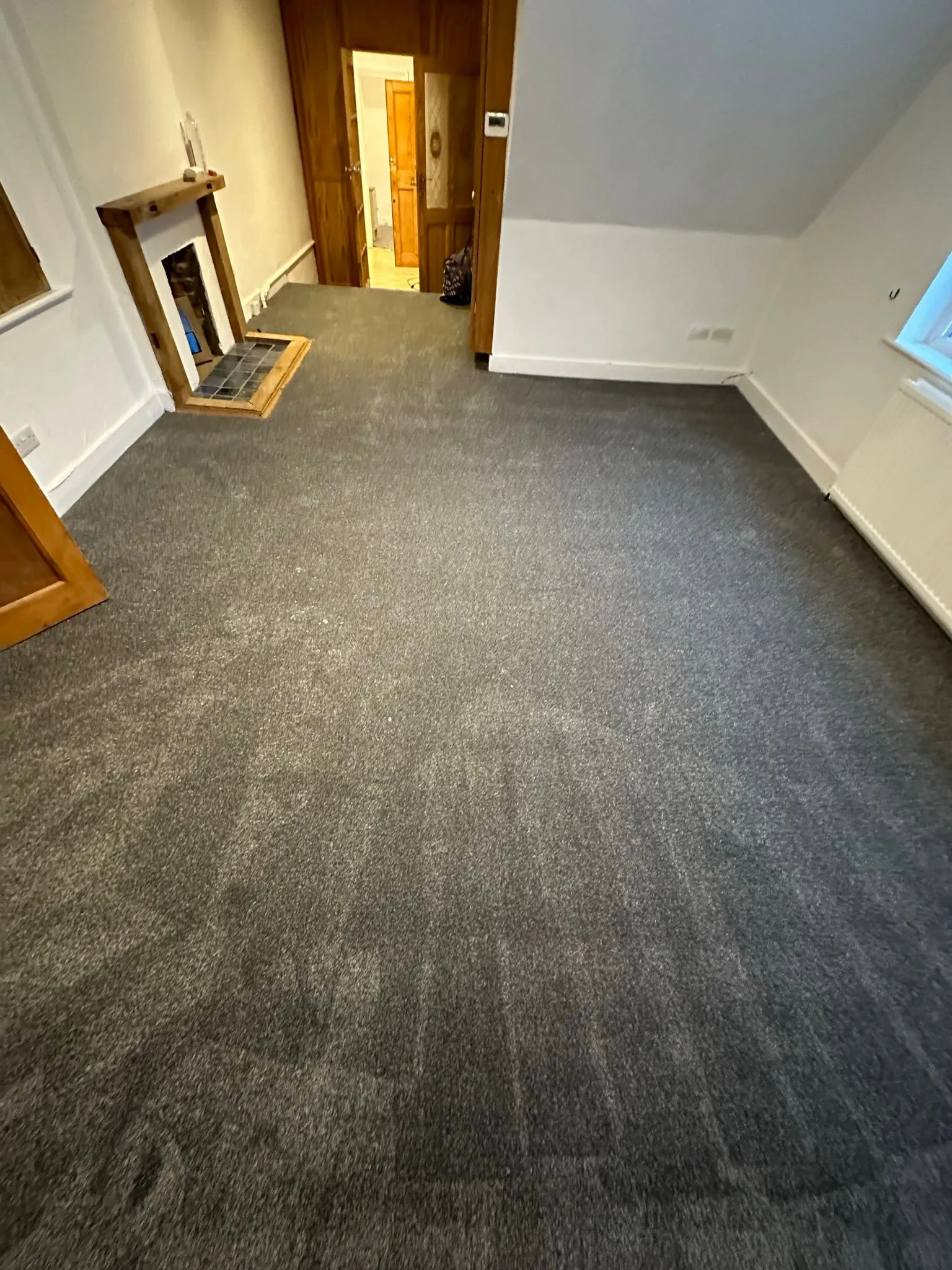
That top-end figure genuinely holds its own against some dedicated acoustic underlay products on the market, and it's more than enough to satisfy most standard lease clauses or management-company requirements when it's fitted under a proper, dense carpet rather than a thin budget pile. We deliberately only stock these two grades rather than a confusing middle tier, because between them they cover the realistic range most flat owners actually need: 8mm for a tight budget or a lower floor, and Cloud Nine 10mm when the acoustic performance matters most.
When You Might Need Specialist Acoustic Underlay
I'd rather be straight with you here than oversell what we stock. There are situations where a standard PU foam underlay, even our premium Cloud Nine grade, isn't the right tool for the job. If you're failing a formal acoustic test carried out by a surveyor, if your lease has an unusually strict clause demanding a specific certified rating in writing, or if the floor structure itself is unusually noisy (a lightweight timber floor with very little mass, for example), a denser rubber or felt-rubber hybrid underlay is often the better fit. Those products can achieve anywhere from around 34dB up to 48dB depending on the exact specification, and they're built specifically around meeting certified test standards rather than everyday comfort.
We don't stock rubber or felt-rubber hybrid underlay ourselves. It's a genuinely different product category with different supply chains and testing paperwork, and we'd rather be upfront about not carrying it than push a product that isn't really our specialism. What we can do is fit carpet over a specialist acoustic underlay you've sourced yourself, as a straightforward labour-only job, the same way we handle any customer-supplied carpet or underlay. If your management company has specified an exact product or rating, buy that product and book us for the fit.
LVT & Vinyl in Flats
Carpet isn't always practical everywhere in a flat, particularly kitchens and bathrooms, and that's where LVT or vinyl usually comes in instead. It's worth knowing that these floors need a different kind of acoustic consideration to carpet: a thin acoustic backing layer under LVT behaves differently to a thick PU foam under carpet, and on its own it generally won't match carpet's impact-noise performance. If a lease clause covers hard flooring specifically, check whether it applies to LVT and vinyl too before assuming a kitchen is exempt. Every flat and every lease is slightly different here, so this is exactly the kind of thing worth talking through on a home visit rather than guessing from a product spec sheet.
Getting the Right Underlay for Your Flat
Noise disputes between neighbours are stressful, and so is trying to decipher exactly what your lease is asking for before you've even chosen a carpet. If you'd rather not guess, bring me the lease clause, the management company's letter, or just a description of the noise problem, and I'll tell you honestly which underlay actually fits the requirement, not just which one I have the most of in the van.
With the mobile showroom, I bring carpet and underlay samples directly to your flat across South London, Surrey and Kent, so you can see and feel the difference between 8mm and Cloud Nine 10mm before committing to either. Get in touch for a free site survey and we'll sort out exactly what your specific flat and lease actually need.
Frequently Asked Questions
Does my lease really require carpet in my flat?
How much impact noise reduction do I actually need?
Can I fit LVT or vinyl in a flat instead of carpet?
Will underlay stop me hearing my neighbours talking or the TV?
Can you fit a specialist acoustic underlay I've bought myself?
Areas I Cover
Based in South London, covering Surrey, Kent and Sussex with the mobile showroom:
Get Your Exact Price
Three fields. Paul replies personally — usually within the hour, always the same day.
Prefer WhatsApp? Send a photo of your room to 07903 320 414 for a faster estimate.